Features in Dehumidifiers: What It Is and Is It Worth It?
As an Amazon Associate we earn from qualifying purchases. Links on this page are affiliate links.
Dehumidifier Features Explained for Buyers
Understanding the specific features explained in product listings helps you choose the right unit for your space. These specifications define how the device operates, its efficiency, and its connectivity. You should check each item against your room’s needs and your home’s electrical setup.
A heater is a common addition in portable air conditioners. It provides warm air when you need heating instead of cooling. This dual function saves space by replacing a standalone heater. Look for this feature if you live in a climate with mild winters.
Dual hose systems are designed for efficiency. One hose pulls air from outside for cooling, while the other exhausts hot air. This design prevents negative pressure in your room. Single hose units often pull indoor air, which can draw in humid air from cracks. Dual hose models typically cool faster and use less energy.
Rechargeable battery packs offer portability. They allow you to move the unit without dragging a power cord across the floor. This is useful for small, temporary spaces. Note that battery capacity limits runtime. You must plug the unit in to recharge.
Energy Star certification indicates high efficiency. These models meet strict energy guidelines set by the government. They use less electricity for the same cooling or drying output. This feature lowers your monthly power bills over time.
A built-in pump allows water to drain upward. Standard units rely on gravity, requiring the drain hose to slope downward. A pump lets you pipe water into a sink or drain higher than the unit. This is essential for basements or upper floors.
Auto defrost protects the coil in cold conditions. It prevents ice buildup when the unit runs in low temperatures. This ensures consistent performance during winter months. Without it, the unit may stop working when ice forms.
Wi-Fi connectivity lets you control the device remotely. You can adjust settings or check humidity levels from your phone. This feature adds convenience for busy households. It allows you to schedule operations based on your routine.
Dehumidifier Features Compared
Energy Star
Energy Star certification means the unit meets strict efficiency guidelines. It uses less electricity to remove the same amount of moisture. You save money on your power bills over time. The AEOCKY 80-Pint model is one example. It offers certified efficiency for large spaces. This feature is best for units that run constantly. You get lower operating costs. The upfront price may be higher. But the savings add up over years. It is also better for the environment. You reduce your carbon footprint. Check the energy consumption specs for details. This is a key spec for long-term owners.
Pump
A built-in pump allows you to drain water upwards. You can pipe the water to a nearby sink or drain. This removes the need for manual emptying of the tank. The Midea 50-Pint model includes this feature. It is best for basements or windowless rooms. You do not need to be near a floor drain. The pump adds to the unit's noise level. It also uses a small amount of extra power. Check the lift height specifications. This tells you how high the water can go. It is a major convenience for difficult drainage situations.
Auto Defrost
Auto defrost prevents ice from building up on the coils. It is essential for units running in cold environments. The Waykar 120-Pint model includes this feature. It automatically thaws the coils when needed. This keeps the unit running efficiently in cold basements. Without it, ice blocks airflow and stops moisture removal. You save energy because the unit does not work against ice. It is best for unheated spaces or garages. The cycle may pause cooling briefly. This is a normal part of the process. Check if your climate requires this feature. It is vital for year-round use in cold areas.
Wi-Fi
Wi-Fi connectivity lets you control the unit via an app. You can monitor humidity levels from your phone. The Midea 50-Pint model offers this capability. You can schedule drying times remotely. This is best for tech-savvy users. You get alerts when the tank is full. You can adjust settings without getting up. The trade-off is potential security risks. You need a stable Wi-Fi network. Setup can be tricky for some users. Not all apps are user-friendly. It adds complexity to the unit. Check the app compatibility before buying. It is a nice-to-have, not a necessity.
Heater
This feature adds a heating element to warm the air expelled by the unit. It helps prevent cold drafts in your space during colder months. You get drier air that also feels warmer. This is useful if you want to save on separate heating costs. The trade-off is higher energy use. Heating consumes more power than cooling alone. You should check the wattage if you run this often. It is best for small rooms or specific zones. Large spaces may not benefit as much. The unit becomes heavier and more complex. Check if your model includes this specific hardware. It is not standard on all dehumidifiers.
Rechargeable
Rechargeable dehumidifiers use batteries instead of just a plug. They work without being tethered to a wall outlet. This offers mobility for small spaces like closets or cabinets. You can move them easily to different areas. The capacity is usually lower than plug-in models. Battery life limits how long they can run. You must remember to charge them regularly. This is best for spot drying or small rooms. It is not suitable for large basements or high humidity areas. The power output is limited by the battery size. You get convenience but less raw performance. Check the runtime specifications before relying on it.
Who Needs These Features
Who needs it
You should prioritize this model if you require advanced climate control and remote management. The Wi-Fi capability allows you to monitor humidity levels and adjust settings from your phone, which is ideal for busy households or vacation homes. The built-in pump enables continuous drainage into a sink or outside, removing the need for manual emptying in large spaces. Auto defrost ensures reliable operation in colder environments, preventing ice buildup that can halt performance. The heater feature helps raise ambient temperatures while drying the air, offering dual comfort in damp, chilly rooms. Dual hose designs often improve efficiency in specific configurations, and rechargeable components add portability. If you need set-it-and-forget-it convenience with precise environmental adjustments, these specs provide the necessary automation and reliability for your specific living conditions.
Who can skip it
You can skip this model if you prefer simple, manual operation without digital complexity. Basic units without Wi-Fi or smart features are often easier to use and less prone to connectivity issues. If you do not need continuous drainage, a standard bucket-emptying model may suffice and is typically simpler. The heater and dual hose features add cost and complexity that most standard bedrooms do not require. Focus on core dehumidification capacity and basic energy efficiency instead. Prioritize a unit with a clear display and straightforward controls if you dislike navigating apps or menus. The pump and auto defrost functions are unnecessary in warm, dry climates or small rooms where moisture levels remain moderate. Save your budget for a reliable core compressor and adequate coverage area rather than paying for connectivity and auxiliary heating capabilities you will rarely use.
Dehumidifier Feature Glossary
Coverage Area
The maximum square footage the unit can effectively dry. Match this number to your room size. A 1,500 sq ft model suits large open spaces.
Daily Capacity
The gallons of water removed per day. Higher numbers handle wetter basements. Look for 50+ pints for damp environments and standard rooms.
Cooling Capacity
The BTU output for cooling air. This spec matters for portable AC units. Higher BTUs cool larger rooms faster during hot weather.
Control Type
How you adjust settings. Options include touch panels, buttons, or smartphone apps. Remote controls offer convenience. Apps allow monitoring from anywhere.
Voltage
The electrical power requirement. Most home units use 115V. High-capacity models may need 220V. Check your outlet compatibility before buying.
Built-in Pump
A component that actively pushes water out. You can drain upward or to a distant sink. This removes the need to empty a bucket manually.
Wi-Fi Connectivity
Wireless internet access for remote management. You can check humidity levels and change modes via a phone. This feature is ideal for vacation homes.
Quick picks
| # | Product | Best for | Price |
|---|---|---|---|
| 1 | AEOCKY 80-Pint 5,500 Sq. Ft. Dehumidifier | large, cool spaces needing high energy efficiency | Check price of AEOCKY 80-Pint 5,500 Sq. Ft. Dehumidifier on Amazon |
| 2 | Midea 50-Pint Dehumidifier with Pump | large spaces needing pump and Wi-Fi | Check price of Midea 50-Pint Dehumidifier with Pump on Amazon |
| 3 | Waykar 120-Pint 6,000 Sq. Ft. Dehumidifier | large basements needing high capacity | Check price of Waykar 120-Pint 6,000 Sq. Ft. Dehumidifier on Amazon |
Our 3 picks
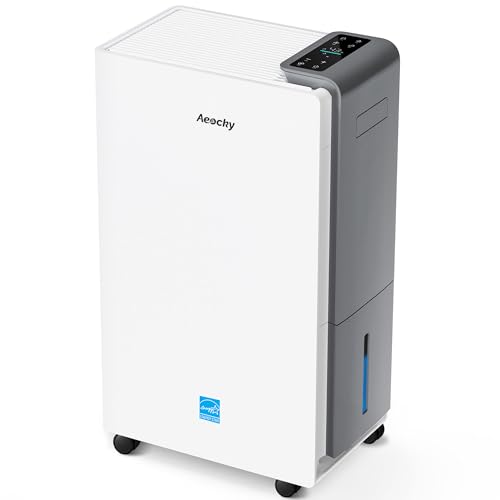
AEOCKY 80-Pint 5,500 Sq. Ft. Dehumidifier
Best for: large, cool spaces needing high energy efficiency
- Features
- Energy Star (what this guide is about)
- Moisture Removal Capacity
- 80 pint/day
- Coverage Area
- 5,500 sq ft
- Drainage Method
- Drain hose
- Energy Star Certification
- ENERGY STAR Most Efficient 2025
- Technology Type
- Rotary compressor
View on Amazon: AEOCKY 80-Pint 5,500 Sq. Ft. Dehumidifier Affiliate link
This compressor dehumidifier covers up to 5,500 square feet, removing up to 80 pints of moisture per day. For feature shoppers, it provides Energy Star certification and automatic defrost sensors to maintain operation below 65 degrees Fahrenheit. It suits you if you need quiet moisture removal across large basements or living areas without frequent frost interruptions.
Pros
- Certified Energy Star Most Efficient 2025
- Covers spaces up to 5,500 square feet
- Defrost sensors maintain operation below 65°F
- Low fan setting runs at 44 dB
Cons
- Lacks a built-in drain pump
- No integrated Wi-Fi or app connectivity
- Moisture removal drops to 56 pints per day in 86°F and 80% RH conditions
Good fit if
- You need certified energy efficiency for large coverage areas up to 5,500 square feet.
- You run the unit in cooler basements where defrost sensors prevent coil icing.
- You want quiet sound levels starting at 44 decibels.
Skip if
- You need an upward-pumping internal water drain.
- You want native Wi-Fi controls instead of smart plug compatibility.
Verdict: AEOCKY 80-Pint Energy Star Dehumidifier fits homeowners who need low electrical draw and reliable cool-temperature moisture removal in large basements. It delivers quiet operation for wide open floor plans, provided you can drain water by gravity.

Midea 50-Pint Dehumidifier with Pump
Best for: large spaces needing pump and Wi-Fi
- Features
- Pump (what this guide is about)
- Moisture Removal Capacity
- 50 pints per day
- Coverage Area
- 4,500 sq ft
- Drainage Method
- Water tank, hose socket, pump
- Target Humidity Range
- 35% to 85%
- Connectivity
- Wi-Fi, MSmartHome app, Alexa, Google
View on Amazon: Midea 50-Pint Dehumidifier with Pump Affiliate link
This Midea unit removes 50 pints of moisture daily and covers up to 4,500 square feet. It includes a built-in pump for continuous drainage and Wi-Fi control via the MSmartHome app. The device operates at 47 dBA. It suits large spaces like basements or cellars where you need remote management and automated water removal without manual tank emptying.
Pros
- Built-in pump for automatic water removal
- Wi-Fi control via MSmartHome app
- Covers up to 4,500 square feet
- Quiet operation at 47 dBA
Cons
- Lower moisture capacity than 80-pint competitors
- No Energy Star certification listed
- Renewed condition, not new
Good fit if
- You need a built-in pump to avoid manual emptying
- You want to control the unit via smartphone app
- You have a large space up to 4,500 square feet
Skip if
- You require Energy Star certification for efficiency
- You need a higher 80-pint capacity
- You prefer a brand-new unit over renewed
Verdict: Midea 50 Pint Dehumidifier with Pump fits users who need automated drainage and app control in large spaces, though it lacks the higher capacity of Energy Star models.

Waykar 120-Pint 6,000 Sq. Ft. Dehumidifier
Best for: large basements needing high capacity
- Features
- Energy Star, Auto Defrost (what this guide is about)
- Moisture Removal Capacity
- Up to 120 pints per day
- Coverage Area
- Up to 6,000 sq. ft.
- Drainage Method
- 3.5 L reservoir, 39.37 in drain hose
- Energy Star Certification
- Energy Star
- Target Humidity Range
- 30% to 80%
View on Amazon: Waykar 120-Pint 6,000 Sq. Ft. Dehumidifier Affiliate link
This Waykar unit removes up to 120 pints of moisture daily for spaces up to 6,000 square feet. It carries Energy Star certification and includes auto defrost and self-drying functions. You control humidity between 30% and 80% using a smart touch panel with a display. The 3.5-liter tank empties via a hose, and the 31.3-pound chassis moves on casters. It suits large, damp areas like basements or bathrooms.
Pros
- 120-pint daily moisture removal capacity
- Energy Star certification for efficiency
- Auto defrost and self-drying features
- Smart touch control with humidity display
- Continuous drainage via included hose
Cons
- No Wi-Fi or remote app control listed
- 3.5-liter tank requires frequent emptying
- No built-in water pump included
Good fit if
- You need high-capacity drying for large rooms
- You want Energy Star efficiency ratings
- You prefer manual touch controls over apps
Skip if
- You require smart home connectivity
- You need a built-in pump for gravity-free drainage
- You only have small spaces under 2,000 square feet
Verdict: Waykar 120 Pint Energy Star Dehumidifier delivers strong moisture removal for large basements without smart features. It fits buyers who prioritize raw capacity and efficiency over app control.
Specifications side by side
| Spec | AEOCKY 80-Pint 5,500 Sq. Ft. Dehumidifier | Midea 50-Pint Dehumidifier with Pump | Waykar 120-Pint 6,000 Sq. Ft. Dehumidifier |
|---|---|---|---|
| Moisture Removal Capacity | 80 pint/day | 50 pints per day | Up to 120 pints per day |
| Coverage Area | 5,500 sq ft | 4,500 sq ft | Up to 6,000 sq. ft. |
| Drainage Method | Drain hose | Water tank, hose socket, pump | 3.5 L reservoir, 39.37 in drain hose |
| Energy Star Certification | ENERGY STAR Most Efficient 2025 | not stated | Energy Star |
| Target Humidity Range | not stated | 35% to 85% | 30% to 80% |
| Connectivity | not stated | Wi-Fi, MSmartHome app, Alexa, Google | Smart touch control panel |
| Technology Type | Rotary compressor | not stated | not stated |
| Capacity | 80 Pint | 50 Pint | 120 Pint |
| Room | Basement, Bedroom, Bathroom, Large Room | Basement | Basement, Bathroom, Large Room |
| Features | Energy Star | Pump | Energy Star, Auto Defrost |
| Dimensions | 14.5 × 8.66 × 24.1 inches | not stated | 9.45 × 13.5 × 20.5 inches |
| Weight | not stated | not stated | 31.3 pounds |
| Size | 80 Pints - 5500 Sq.Ft | 4,500 Sq. Ft. | 120 Pints 6000 Sq. Ft with Drain Hose |
| Color | White | White | White |
| Model | RHEA-001 | RMD50PSAW | YDZ-120 |
Frequently asked questions
Is an Energy Star dehumidifier worth the investment?
Yes, if you plan to run the unit frequently. Energy Star certification indicates the device meets strict efficiency guidelines, using less electricity to remove the same amount of moisture. This leads to lower power bills over time. The AEOCKY 80-Pint model is a solid example, offering certified efficiency for large spaces without needing smart connectivity.
Why do I need a built-in pump in my dehumidifier?
A built-in pump allows for automated drainage, so you do not need to manually empty the water tank. This is particularly useful for large spaces or areas where gravity drainage is not possible. The Midea 50-Pint model includes this feature, enabling continuous operation in larger rooms while also offering Wi-Fi control for remote monitoring.
What is the benefit of Auto Defrost on a dehumidifier?
Auto Defrost prevents the evaporator coil from freezing in cold environments, ensuring consistent performance. This feature is essential for basements or unheated rooms where temperatures may drop. The Waykar 120-Pint model includes Auto Defrost, allowing it to maintain high capacity and efficiency even in cooler conditions without manual intervention or performance drops.
How does Wi-Fi connectivity improve dehumidifier usage?
Wi-Fi lets you monitor humidity levels and adjust settings from your phone. This remote management is ideal for busy households or vacation homes where you cannot check the unit physically. The Midea 50-Pint model offers this capability, allowing you to control the device and ensure proper drying even when you are away from the room.
What capacity dehumidifier do I need for a large basement?
You need a high-capacity unit to handle the moisture load in large basements. Look for models with higher daily pint capacities and broad coverage areas. The Waykar 120-Pint model provides strong moisture removal for spaces up to 6,000 square feet. Its high capacity ensures it can effectively dry large, damp areas without struggling or running continuously.
Does a larger coverage area mean a bigger dehumidifier?
Not necessarily, but higher capacity units often cover more space. Coverage area indicates the maximum square footage the unit can effectively dry. Match this number to your room size. The AEOCKY 80-Pint model covers 5,500 square feet, while the Midea 50-Pint covers 500 square feet. Choose based on your specific room dimensions to ensure effective drying.