Midea vs Della Window Air Conditioners: Which Brand Fits You?
As an Amazon Associate we earn from qualifying purchases. Links on this page are affiliate links.
When you search for midea vs della window air conditioner options, you will find two distinct approaches to cooling. Both brands offer units designed for standard window installations. The Midea model provides basic mechanical controls for small spaces. The Della unit offers smart connectivity and higher capacity for larger rooms. You need to decide if you prefer simplicity or advanced features. This comparison breaks down the key specifications to help you choose the right fit for your home.
Key differences
| Aspect | Midea 5,000 BTU Mechanical Window AC | Della 10,000 BTU Wi-Fi Window Air Conditioner |
|---|---|---|
| Cooling Capacity | 5,000 BTU | 10,000 BTU |
| Coverage Area | 150 Sq ft | 450 Sq ft |
| Control Type | Mechanical | App, voice, remote, LED |
| Noise Level | not listed | 54 dB |
| Weight | 33.1 pounds | 48.7 pounds |
Which one should you choose?
Choose Midea 5,000 BTU Mechanical Window AC if
- You need a compact unit for a small room under 150 square feet.
- You prefer simple mechanical knobs without complex setup.
- You want a lighter unit that is easier to handle during installation.
Choose Della 10,000 BTU Wi-Fi Window Air Conditioner if
- You need to cool a larger space up to 450 square feet.
- You want to control the temperature via a smartphone app or voice commands.
- You require specific noise level data for a bedroom or office.
Verdict: Choose the Midea if you only need basic cooling for a small, personal space with minimal controls. Choose the Della if you need more power for a larger room and want the convenience of smart app control. The Della offers more features, while the Midea offers simplicity.
Midea vs Della AC Comparison
cooling capacity
The Midea unit delivers 5,000 BTUs of cooling power, while the Della model offers 10,000 BTUs. This significant difference means the Della unit is designed for much larger spaces. You should consider the Della if you need to cool a large bedroom or living area. The Midea is better suited for small rooms where less power is required. The higher BTU rating on the Della allows it to handle greater heat loads effectively. Your choice depends entirely on the size of the room you intend to cool.
coverage area
Coverage area specifications highlight the practical difference between these two units. The Midea is rated for spaces up to 150 square feet. In contrast, the Della unit covers areas up to 450 square feet. This threefold increase in coverage makes the Della a more versatile option for larger rooms. If you are cooling a small closet or bathroom, the Midea’s smaller footprint is sufficient. For open-plan areas or larger bedrooms, the Della provides the necessary reach to maintain comfort throughout the space.
control type
Control interfaces differ significantly between the two brands. The Midea uses a mechanical control system, which relies on physical knobs or buttons. This approach is simple and reliable, requiring no setup or connectivity. The Della offers a more advanced control scheme, including a remote, LED panel, and Wi-Fi connectivity for app and voice control. If you prefer straightforward, tactile operation without digital setup, the Midea is ideal. If you want to adjust settings from your phone or use voice commands, the Della provides superior convenience.
energy efficiency
Energy efficiency is a key factor for long-term operation costs. The Della unit features a Combined Energy Efficiency Rate (CEER) of 10.9, which is explicitly stated in its specifications. This rating indicates how effectively the unit converts electricity into cooling power. The Midea product data does not list a CEER rating, making direct efficiency comparison difficult. However, the Della’s certified efficiency suggests it may consume less power for the amount of cooling it provides. For users prioritizing energy savings, the Della’s documented rating offers a clear advantage.
noise level
Operating noise can impact comfort, especially in bedrooms or home offices. The Della unit specifies a noise level as low as 54 dB, which is considered whisper-soft for window air conditioners. This allows for better relaxation and sleep without disruptive fan noise. The Midea product data does not provide a decibel rating, so its noise output remains unspecified. If quiet operation is a priority for your space, the Della’s verified low decibel level is a significant benefit. You can enjoy cooling without the background hum that often accompanies less efficient units.
Which Window AC Fits Your Space
Someone cooling a small room with simple needs
The Midea unit offers 5,000 BTUs of cooling power. This capacity is sufficient for spaces up to 150 square feet. It uses mechanical controls, which means no apps or complex setups. You get two cooling modes and two fan speeds. This straightforward design is ideal if you want basic, reliable cooling without digital features.
A renter needing smart features and larger coverage
The Della model provides 10,000 BTUs, covering up to 450 square feet. It connects via Wi-Fi for app and voice control. You can adjust settings remotely or use the included remote. The unit also features a 24-hour timer and multiple fan speeds. This smart connectivity and higher capacity make it suitable for larger rooms or offices.
A user prioritizing energy efficiency and quiet operation
The Della unit has a Combined Energy Efficiency Rate of 10.9. This rating helps reduce energy consumption over time. It operates at 54 dB, which is whisper-soft for background noise. You can use the eco mode to save power while maintaining comfort. These specs make it a practical choice for bedrooms or living areas where quiet and efficiency matter.
The products compared
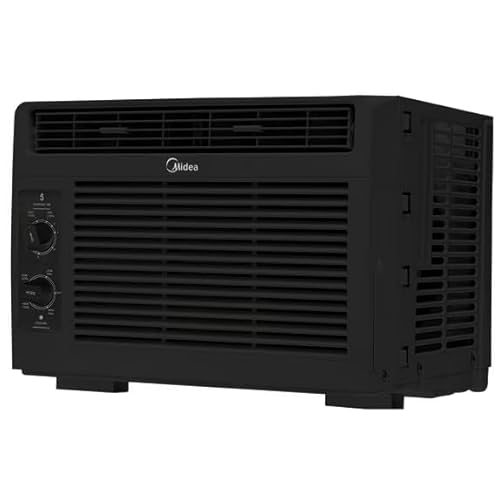
Midea 5,000 BTU Mechanical Window AC
Best for: Small rooms needing basic mechanical cooling
- Cooling Capacity
- 5,000 BTU
- Coverage Area
- 150 Sq ft
- Control Type
- Mechanical
- Dimensions
- 13.2 × 16 × 12.1 inches
- Weight
- 33.1 pounds
View on Amazon: Midea 5,000 BTU Mechanical Window AC Affiliate link
The Midea 5,000 BTU unit covers up to 150 square feet. It uses mechanical controls with seven temperature settings and two fan speeds. The physical dimensions are 16 inches wide, 12.1 inches high, and 13.2 inches long. It weighs 33.1 pounds and fits windows 23 to 36 inches wide. This model suits small rooms where simple operation matters more than smart features.
Pros
- 5,000 BTU cooling capacity for small spaces
- Covers areas up to 150 square feet
- Seven temperature settings for precise control
- Two fan speeds for airflow adjustment
Cons
- Mechanical controls lack digital displays
- No remote control included
- No smart home integration like Alexa
Good fit if
- You need a simple, reliable unit for a small bedroom
- You prefer physical knobs over digital interfaces
- You have a window between 23 and 36 inches wide
Skip if
- You require remote or app control
- Your room exceeds 150 square feet
- You want smart home compatibility
Verdict: Midea 5,000 BTU Mechanical Window AC is a straightforward cooling solution for small spaces. It fits buyers who prioritize basic functionality and mechanical reliability over digital convenience.

Della 10,000 BTU Wi-Fi Window Air Conditioner
Best for: Smart control in medium rooms
- Cooling Capacity
- 10,000 BTU
- Coverage Area
- Up to 450 sq ft
- Noise Level
- 54 dB
- Control Type
- Remote, LED panel, Wi-Fi app
- Voltage
- 115V
- CEER Rating
- 10.9
View on Amazon: Della 10,000 BTU Wi-Fi Window Air Conditioner Affiliate link
This Della unit delivers 10,000 BTU of cooling for spaces up to 450 square feet. It features a CEER of 10.9 for energy efficiency and operates at 54 dB. You get full control via a remote, LED panel, Alexa voice commands, or the Della+ app. The compact design fits windows from 23 to 36 inches wide. It is ideal for bedrooms or offices needing smart connectivity.
Pros
- Cools rooms up to 450 sq ft
- Smart control via app and Alexa
- Quiet operation at 54 dB
- Includes remote and LED panel
Cons
- Higher noise level than 50 dB models
- No dehumidifier mode listed in specs
- Limited to 115V power supply
Good fit if
- You need app or voice control
- You want to cool a 450 sq ft room
- You prefer smart features over mechanical dials
Skip if
- You require a dehumidifier function
- You need a 230V power connection
- You want a quieter unit under 50 dB
Verdict: Della 10,000 BTU Smart Window AC suits you if you want smart control and efficient cooling for a medium-sized room. It replaces mechanical units with app and voice options.
Specifications side by side
| Spec | Midea 5,000 BTU Mechanical Window AC | Della 10,000 BTU Wi-Fi Window Air Conditioner |
|---|---|---|
| Cooling Capacity | 5,000 BTU | 10,000 BTU |
| Coverage Area | 150 Sq ft | Up to 450 sq ft |
| Noise Level | not stated | 54 dB |
| Control Type | Mechanical | Remote, LED panel, Wi-Fi app |
| Voltage | not stated | 115V |
| CEER Rating | not stated | 10.9 |
| Features | not stated | Wi-Fi |
| Dimensions | 13.2 × 16 × 12.1 inches | 17.3 × 18.6 × 13.3 inches |
| Weight | 33.1 pounds | 48.7 pounds |
| Size | 5,000 BTU | 10,000 BTU WIFI |
| Color | Black | White |
| Model | RMW05MWB | 048-TL-W10KWD |
Frequently asked questions
Is Midea or Della better for small bedrooms?
Midea is the better choice for small bedrooms. Its 5,000 BTU unit covers up to 150 square feet effectively. The mechanical controls offer simple operation without complex digital interfaces. This straightforward design suits users who prefer basic functionality and reliable cooling for compact spaces.
Does Della have smart features for remote control?
Yes, the Della 10,000 BTU model includes Wi-Fi connectivity. You can control the unit remotely via a smartphone app. This feature replaces traditional mechanical controls, allowing you to adjust settings from anywhere. It is ideal for users who want modern convenience and flexible management.
Which brand offers a larger cooling capacity?
Della offers a larger cooling capacity. Its unit provides 10,000 BTUs of power, compared to Midea’s 5,000 BTUs. This higher capacity allows the Della model to cool medium-sized rooms more effectively. If you need to chill a larger area, the Della unit is the superior option.
How much space does the Midea unit cover?
The Midea 5,000 BTU unit covers approximately 150 square feet. This capacity is suitable for small rooms or bedrooms. It provides adequate cooling for compact areas without overwhelming the space. You should choose this model if your room falls within this size range.
Are the units easy to install in standard windows?
Both brands are designed for standard window installations. The Midea unit measures 16 inches wide and 12.1 inches high. The Della unit is slightly larger at 18.6 inches wide. You should verify your window dimensions against these specifications to ensure a proper fit before purchasing either model.
Which AC is lighter and easier to handle?
The Midea unit is lighter and easier to handle. It weighs 33.1 pounds, making it simpler to lift and position. The Della model weighs 48.7 pounds due to its larger size and smart components. If you prefer a lighter unit for easier installation, the Midea is the practical choice.
Do I need an app for the Midea AC?
No, you do not need an app for the Midea AC. It uses mechanical controls for operation. This means you adjust settings directly on the unit itself. This approach is beneficial if you prefer tactile controls and do not want to rely on digital interfaces or smartphone connectivity.
Can I use voice commands with the Della AC?
The Della unit supports smart control features, which typically include voice command compatibility. Its Wi-Fi connectivity allows integration with smart home ecosystems. This enables you to adjust temperature or modes using voice assistants. It is a strong option for users who want hands-free operation and smart home integration.